CodeMettle Announces Pending Patent for Pulse, a Tactical NetOps Data Fabric Technology 

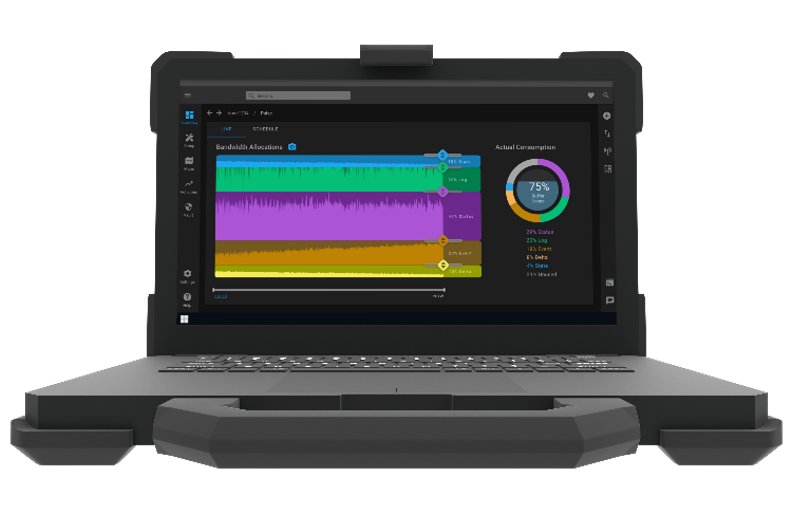
Pulse helps signal officers prioritize, control, and route data in tactical environments where delivery is critical, bandwidth is limited and expensive. 

ATLANTA, July 11, 2023 – CodeMettle, an innovative developer of Network Operations (NetOps) software, today announced its patent pending product, Pulse. Designed with the U.S. Department of Defense’s (DoD’s) data centric NetOps goals in mind, Pulse is the first commercial software to enable users to prioritize and control the flow of data through multiple transmission channels while maximizing the effective use of available bandwidth at the tactical edge. Pulse is a patent pending technology developed by CodeMettle and is shaped by 10 years of experience delivering NetOps solutions for Soldiers and DoD tactical networks.  

Up to this point, tactical communications have relied on bandwidth limited, high latency communications channels. Decision-making is often constrained by spotty information resulting from unreliable transmissions and overloaded networks. Pulse optimizes the available bandwidth resulting in more reliable communications of key information across the network. Put simply, Pulse enables more efficient and timely communications resulting in faster and more informed decision making for commanders in critical battlefield environments. 

“Pulse enables the DoD to make the most of their tactical networks and available bandwidth,” said Richard Graham, CEO of CodeMettle. “This solution will give DoD decision makers the ability to make accurate and timely decisions without having to purchase additional bandwidth where bandwidth may be limited and expensive.” 

In addition to efficiently managing bandwidth over Disconnected, Intermittent, and Latent (DIL) networks, Pulse will soon enable better control of data flow through multiple features currently unavailable on any other platform. These integrated features include visualization, automated data expiry and schedule bandwidth rules, multi-path transmission, and cached content delivery, available in a single, easy-to-use graphical user interface. Pulse intends to enable users to access, gather, and prioritize data at the speed of the mission without the need for a Field Service Representative (FSR). 

For more information or to set up a demo, please email [email protected].

CodeMettle Wins U.S. Army Contract to Provide Software Licenses for Integrated NetOps Battalion and Below (INB2)

INB2 is the first multi-vendor, waveform agnostic NetOps software application to allow monitoring and management of the Integrated Tactical Network (ITN) from Company to Division.

ATLANTA, June 20, 2023 – CodeMettle, an innovative developer of Commercial Off-The-Shelf (COTS) NetOps software, has been awarded a contract to provide software licenses for the INB2 Program that will be used to field and manage disparate and interconnected radio networks. This contract marks the software’s initial program deployment, which concludes a five-year Middle Tier Acquisition (MTA) process that started at a Technology Readiness Level (TRL) of 5 and is now at a TRL of 8. CodeMettle demonstrated the software’s performance and reliability during the Army’s Capability Set Operations Demonstration and Adversary Assessment with the 2nd Calvary Regiment as well as Pacific Pathways with the 82nd Airborne Division.

“The Army can now monitor and manage tactical radios in conjunction with the Lower Tactical Tier (LTT) networks quickly and with ease knowing they’re using a tool that was developed through agile practices and continuous feedback loops through multiple Soldier touch points,” said Richard Graham, CEO of CodeMettle. “We are certain all Army units, other U.S. military branches, and even federal law enforcement have similar requirements and that they will be able to easily implement and deploy this solution to modernize and better manage their radio networks as well.”

CodeMettle’s NetOps capability is a first-of-its-kind, platform-agnostic implementation utilizing software architectures to provide distributed common management and operational views of multi-vendor, Disconnected, Intermittent, and Limited (DIL) radio networks. It provides an intuitive, user-friendly interface, integrates with virtually any tactical radio type and waveform, reduces the time it takes to keep radio networks up and running, and requires minimal training to operate effectively. CodeMettle is continuing to advance its INB2 solution to meet the Army’s LTT requirements within the Unified Network Operations (UNO) Program of Record and is looking forward to supplying more licenses to the Army as it continues to field the solution.

For more information or to set up a demo, please email [email protected].

CodeMettle Releases Terminus 3.0, the Most Secure and Efficient Warfighter-Ready Node Manager on the Market

Enhancements Fortify Security Protocols and Create User-Relevant Alarm System 

ATLANTA, May 1, 2023 – CodeMettle, an innovative developer of NetOps software, today announced the launch of Terminus 3.0. Developed with a strategic focus on Warfighter requirements, Terminus is the only commercial-grade software developed from the ground up to efficiently stand up and manage tactical communications nodes at scale in contested and congested Department of Defense (DoD) and other networks. 

“Secure and reliable networks, from edge to enterprise, are the foundation of successful missions throughout the DoD,” said Richard Graham, CEO of CodeMettle. “This release of Terminus further ensures a secure, reliable, efficient, and collaborative battlefield network environment. The software, designed alongside the Army, helps Soldiers and Commanders meet their objectives for secure and unified network operations. Terminus 3.0 also includes CodeMettle’s patent-pending Pulse technology, which streamlines the flow of data to enable more efficient and timely battlefield communications and command decisions.” 

Terminus is platform and protocol agnostic and designed to run out-of-the-box by multiple users at once with limited technical skills and experience. It simplifies the provisioning and management of multi-network hybrid communications kits, reducing the number of tools needed at the edge to establish secure communications quickly and reliably.  

Terminus 3.0 has enhanced user and role authentication to increase accountability, keep pace with the ever-changing security landscape within the DoD, and proactively prepare for Zero Trust and Federal Information Processing Standard (FIPS) 140-3. CodeMettle will publicly demonstrate Terminus 3.0 for the first time at SOF Week 2023, taking place May 8-11 in Tampa, FL. 

For more information or to set up a demo at SOF Week, please email [email protected].

Multi-Path Architecture: A Promise of Resiliency at the Edge

For Warfighters at the edge, the ability to recover in advance of enemy maneuvers is everything. 

Certainly, there have been tremendous strides toward moving information, decision-making and control closer to the edge. Still, one of the biggest sticking points to edge resiliency remains: the inefficient and rigid process to allocate bandwidth to each terminal or device. Until now!

With the sudden viability of low earth orbit (LEO) satellite constellations, the promise of a multi-path architecture creates tremendous possibilities for flexibility and control at the edge. It’s a paradigm shift that could become a game-changer for mission success.

Having many options for transmission is very good for redundancy and multi-path, but it’s only useful if things go bad. Most of the time, all the extra paths will go unutilized and will still cost money and effort to keep up and running. What if we could have the advantages of multi-path for redundancy while also being able to take advantage of multi-path to enable higher bandwidth and new use cases for the network, like plug and play networking? 

Even if we want to take advantage of multi-path, there is a problem of configuring, monitoring, and managing these systems. The more systems you add, the complexity of management rises exponentially. Therefore, there is a need to lean heavily into automation, abstraction and novel user experiences. As the network eventually becomes multi-path everywhere, the ability to add highly trained personnel to manage the network becomes increasingly difficult. There is a need to further simplify and abstract even more than you were expecting in order to push the capabilities and advantages of multi-path to every edge of the network.

Ideally, you want the planners to be able to pick any transmission system available for a mission and then make it so easy to configure that all the operator needs to do is plug everything together, turn the system on and then start providing services to the local area. Long complex setup, configuration and troubleshooting of the network to get the system up and running should be a thing of the past. Highly trained personnel should only be needed at the highest level. The network should be just plug and play, use any network system available, and be operable by anyone with a small amount of training.

The Challenge: Many transmission systems available, but cannot use all of them efficiently

There are a high number of options when it comes to choosing between which transmission systems to use for a particular mission. Yet, for most network configurations, an adequate PACE (Primary, Alternate, Contingency, Emergency) plan is implemented in order to realize high-availability. Most network configurations will struggle to use the available options and bandwidth at the same time.

  • High number of transmission options seems good from reliability point of view, but it it costs time, effort and money to provision, operate, and maintain each piece of equipment
  • Each transmission system employed has its own planning and configuration management process
  • Router configuration complexity grows for each new system added
  • The primary routing choices in government networks (OSPF and BGP) don’t lend themselves to load balancing across links very easily, increasing the expertise required

Even with three to four paths available, most networks can only use one at a time. The PACE plan is used for when one path fails and the other is available to take the load. This is a costly approach since each path needs to be configured to bear the burden of the entire network. 

The Challenge: Many paths across many transmission systems, but certain traffic prefers one over the other

Many paths available for traffic to utilize is nice, but not all transmission systems exhibit the same behavior. Geostationary Equatorial Orbit (GEO) SATCOM with its high-delay and low-bandwidth, or Line of Sight (LOS) microwave with its high-bandwidth and low delay, offer vastly different user experiences. Just ask anyone who has ever made a phone call over LOS, then have the network switch over to SATCOM and they will say the user experience degrades vastly. The long round-trip times associated with GEO SATCOM are very noticeable for real-time traffic like voice, but it’s high reliability and ability to work in regions where LOS may not be possible make it a good choice for many other applications. Having multiple paths for traffic to use is a good thing, but most networks will be configured in a way that all traffic will only use one path at a time as part of a PACE plan.

  • Different applications will prefer and/or tolerate different transmission systems depending on performance characteristics of the application and transmission system
  • Multi-path is nice, but if only one path is used at a time the advantages of each transmission system for different types of applications is lost

Most of the applications will have middling performance most of the time, but will have uneven or unpredictable performance over most networks since the best path for transmission is not chosen on a per application basis.

The Challenge: Antiquated Allocation Process

Today, defense network operators are stuck with outdated network allocation processes and technologies. Here are just three challenges they face: 

  • Planning can take a month. A Satellite/Gateway Access Request, or SAR/GAR, can take from zero to 30 days. So, planners need to generally know what allocation is needed a month in advance.
  • Allocations are meant to be static. If plans change, it’s difficult. While operators have some ability to manage within the spectrum that’s been allocated to their force, they have little ability to dynamically adjust beyond that allocation. Which means, they cannot offer Warfighters desired flexibility in contested environments. 
  • Authorizations for reallocation are managed manually. SAR/GARs are considered one by one. And reallocations are often managed with stand-alone systems set up to track the allocations, terminals and devices. Such manual processes are fraught with delays, errors and access limitations that get in the way of an accurate view of allocation at any one time. 

Additionally, a long-standing defense practice of over-subscribing to GEObandwidth to lock in access and rates creates its own inefficiencies. Oversubscription often leads to load imbalance, with a surplus of bandwidth at some terminals and insufficient bandwidth at others. It’s a costly approach creating unnecessary budget spend, inefficient manpower allocation and decreased network effectiveness.

The concept of multi-path architecture, where defense organizations access LEO, medium arth orbit (MEO), GEO and Wideband Global SATCOM systems (WGS), is not new. Ready access to multiple paths would give network operators flexibility when selecting the appropriate path(s) for email, video and data for each use case. Yet high costs, high risks, elongated allocation processes and limited multi-orbit coverage have been obstacles to achieving the vision of dynamic re-planning of networks.

Then Starlink over Ukraine happened. When SpaceX quickly set up a Starlink internet connection for Ukraine, it was a game-changer earlier in the war. It also shined a spotlight on the viability and effectiveness of LEO, which now has thousands of functional satellites in orbit. Suddenly, LEO constellations were recognized as a (relatively) inexpensive and readily available commercial asset that may make the LEO-MEO-GEO multi-path concept a practical reality.

Unlike with MEO and GEO, there is a low likelihood of interfering with other signals when using LEO. So, there’s less need for situational awareness around how any one LEO constellation is being used – which minimizes the need for painstaking situational awareness and planning. 

This reality brings us one step closer to the promise of a multi-path architecture delivering worldwide coverage, with: 

  • Greater resiliency. With a multi-path architecture, network operators can move from a linear PACE plan to having four viable primary path options. They can maneuver faster and create an asymmetrical advantage against the enemy.
  • New commercial capabilities. LEO is predominantly a commercial endeavor, and a multi-path architecture would instantly leverage the newest capabilities coming out in the commercial space for military applications. The move is aligned with a defense goal of combining the best of COMSATCOM and MILSATCOM for military advantage. 
  • Lower cost. Unlike launching a GEO satellite, which represents years of work and billions of dollars, LEO satellites are far less expensive and launched in the thousands. A multi-path architecture that incorporates LEO will have a lower average cost than one without – and lower than it would have been just five years ago. As LEO satellites continue to launch, the costs should only come down.

Simplifying the Complexity of Multi-Path

Forward-leaning defense leaders are planning now for what’s next. They’re dreaming and thinking and preparing for the day when network operators can do complex satellite networking on the fly in a contested or congested environment. 

One step will be to digitally transform archaic processes used to allocate and manage spectrum, creating a resilient architecture that takes advantage of the new capabilities coming from the multiple LEO-MEO-GEO orbits. That’s where CodeMettle comes in. We have unique DNA in managing transport. We have deep expertise with taking technology built by others and integrating it with a singular interface that simplifies how operators access and use the system of systems. 

Our vision for multi-path is that defense teams maintain full control of which systems they want to use while we create a simple interface that stays the same even when there are different or changing systems on the back end. 

We’re already agnostically managing transport solutions across LEO, MEO and GEO. As multi-path architectures become increasingly viable – and as your operations get more complex with multiple paths – remember that you don’t need to get stuck in today’s processes. Multi-path architecture is becoming viable, creating a paradigm shift that opens up possibilities for greater choice, flexibility, speed and resiliency – from the architecture itself to the user interface. Get ready because we are.

Army Invited CodeMettle’s INB2 Technology to PC22 Exercise

Air and ground, multi-vendor Edge-to-Enterprise NetOps Visibility and Control

CodeMettle, an innovative software developer of Network Operations (NetOps) software applications, announced their involvement at the recent Army Project Convergence 2022 (PC22) Exercise with the Integrated Battalion and Below (INB2) program. INB2 is a multi-waveform monitoring and management capability that started as a Network Cross-Functional Team (N-CFT) initiative in 2019, through the Adaptive Acquisition Framework, Middle Tier Acquisition (MTA). INB2 participated in PC22, proving their network management capability of the TrellisWare TSM Waveform and Tactical Radio Integration Kits (TRIK) as part of the Integrated Tactical Network (ITN). CodeMettle’s platform-agnostic NetOps software application allows Soldiers to visualize and manage disparate radio technologies and waveforms within a single NetOps platform in a distributed battlefield management scenario. INB2 also aligns with the Joint All Domain Command and Control (JADC2) initiative by displaying a joint Secure But Unclassified Network Common Operational Picture (NetCop).

“Siloed or poorly integrated defense network technologies can delay time-critical communications and decisions,” said Richard Graham, CEO of CodeMettle. “For the all-service experiment, we were proud to provide defense leaders and operators a unified view of multiple technologies across disciplines, paired with essential tasking tools that speed issue identification and repairs.”

Product Manager (PM) Tactical Cyber Network Operations (TCNO) and Product Lead Network Manager installed and configured INB2 for Air and Ground TSM network management. The INB2 capability enabled monitoring and managing the network and provided a situational understanding of the tactical radio network at the Exercise Control S6 NetOps cell. INB2 is the first application to provide this capability for the S6 from the ITN tactical edge to the highest echelon.

As part of DevSecOps and Agile Software Development Methodologies, CodeMettle received real-time feedback back from operational Users. This collaboration allows for continual improvement and flexible responses to changes in need, and understanding of the problems to be solved – enabling CodeMettle to deliver a better capability for the Warfighter.

“Defense leaders, network operators and Warfighters were delighted to see multiple technologies on one screen,” commented Graham. “They also validated many of the benefits of integrated network operations and offered valuable feedback on which tactical data is most important to see – and how they want to see it. We’ll use that input for future product enhancements.”

About CodeMettle

CodeMettle serves defense, government and commercial partners through innovative and scalable commercial software products. Our agile solutions solve the most complex data integration, network operations and process challenges. Headquartered in Atlanta, Georgia, CodeMettle provides a suite of distributed and scalable Network Operations products that enable enterprises to analyze, organize and consolidate complex data, processes and operations. Learn more.

Contact:

Laura Hazelwood

CodeMettle

[email protected]

Acceleration, Convergence and Distribution: 3 Key Themes from TEM 9

Earlier this month, we sent a CodeMettle team of three to the network-related Technical Exchange Meeting (TEM) 9 in Nashville, hosted by the U.S. Army’s Network Cross-Functional Team in collaboration with Program Executive Office Command Control Communications-Tactical (PEO-C3T). TEM 9 focused on Capability Sets 25 and 27 in both Pacific and European theaters of operations. 

We’ve been attending TEM events since about TEM 5 and we always look forward to the Army updates, technology breakout sessions and, especially, the informal one-on-one and small-group engagement with Government decision-makers. 

This year did not disappoint. In fact, with numerous high-profile senior leaders in attendance and more than 1,000 participants from war offices around the world, TEM 9 was simply phenomenal! We moved from one discussion to the next exploring the challenges, progress and the art of the possible for defense networks. 

Now that we’re back, we’ve had a moment to reflect on TEM 9 – and to capture three key themes that should have the greatest impact on our collective next steps:

1) Acceleration is Driving Defense Adoption of Commercial Best Practices

Like it or not, innovation is happening within the Army and across all joint and allied forces. For decades, defense forces relied on custom technologies proven to stand up to their rigorous performance and security demands. But technology innovations are continuing at their accelerated pace, with an increasing reliance on software-driven products. 

At the same time, escalation of the Great Power Competition is hastening anticipated conflict ahead of the 2030 target defense teams had been tracking to. Conditions are evolving quickly, and many anticipate a potential conflict within 5 years. The Department of Defense (DoD) can’t keep doing technology the way it used to. 

The Army is pushing itself to adopt and adapt commercial best practices. Part of the push is to shave costs. More importantly, there’s a push to quickly deliver innovative Warfighter solutions – that don’t harm national security – in advance of a potential conflict with peer adversaries. 

“X”-as-a-service solutions, for example, offer tremendous flexibility and help to maintain the fast pace of technology advancement. Adoption of DevSecOps is a meaningful shift that supports defense adoption of software-driven products, allowing for greater acceleration of capability that’s making our Army faster, stronger and more agile. 

These advancements introduce both capabilities and complexities that are new to the Army and its protocols. Which means, the Army and its industry partners must continue to collaborate to quickly implement industry best practices and solutions to give our Warfighters an edge in battle. Industry should be looking for ways to help accelerate that digital transformation.

2) Convergence is Bigger than Network Technology

When the Army says “convergence,” their Project Convergence initiative and demonstrations quickly come to mind. The Army is committed to network modernization that enables multi-domain operations for joint forces at the tactical edge. For some time, the DoD, Army and the other branches – and here at CodeMettle – have been exploring network convergence such as edge-to-enterprise network operations and Unified Network Operations (UNO). Those initiatives and advancements are certainly central to the convergence conversations. 

At TEM 9, though, convergence was about more than the network. Converging the network is important, but the true power of convergence comes from converging many capabilities with the network into a faster, more lethal force. That is, speeding up the delivery and understanding of key data, communications and situational awareness for commanders and Warfighters, to enable a faster kill chain.

There’s tremendous potential and innovation around the convergence of ideas and technologies to meet Warfighter needs. The Army led exploratory discussions that asked, “How do ideas converge at the layer of data? Or at the layer of networking? Or applications or Zero Trust?” 

It’s clear that advancements such as Zero Trust are essential. ZT must be a global, enterprise-wide approach. It can’t be effectively implemented in parts of a technology ecosystem or in some locales. Requirements cannot become a responsibility managed by disparate groups with separate and important mission sets. 

The group agrees that, if software is the answer and hardware is the platform, defense must be software-focused and platform-agnostic. It’s also clear that convergence is a rich vision that requires deep engagement across functions and across defense, industry and academia. 

3) Distribution of Data is Essential

While the convergence of forces, ideas, networks and other technologies is one ideal, there’s another that’s quite the opposite: data. 

Right now, it’s not the convergence of data that’s a challenge. It’s that the Army has too much! It’s too time-consuming to find the right data. The distance between the context of the data (at the edge, for example) to get to the decision-makers. 

The DoD’s strategy is to make data Visible, Accessible, Understandable, Linked, Trustworthy, Interoperable and Secure (VAULTIS). It’s an important goal, requiring new thinking around data meshing and other ways to discover and present relevant, timely data. As we’ve posited elsewhere, we believe it also requires a reliable data-driven network that supports near-instant visibility into the network’s baseline and current state, so Warfighters at the edge can confidently perform their duties.

There is much work to be done. And, the Army has created a collaborative community of smart industry partners who are ready, willing and able to keep pushing the acceleration, convergence and distribution needed to modernize systems and, ultimately, create battlefield advantage. It was an honor and a pleasure to participate in TEM 9. We look forward to all that’s next.